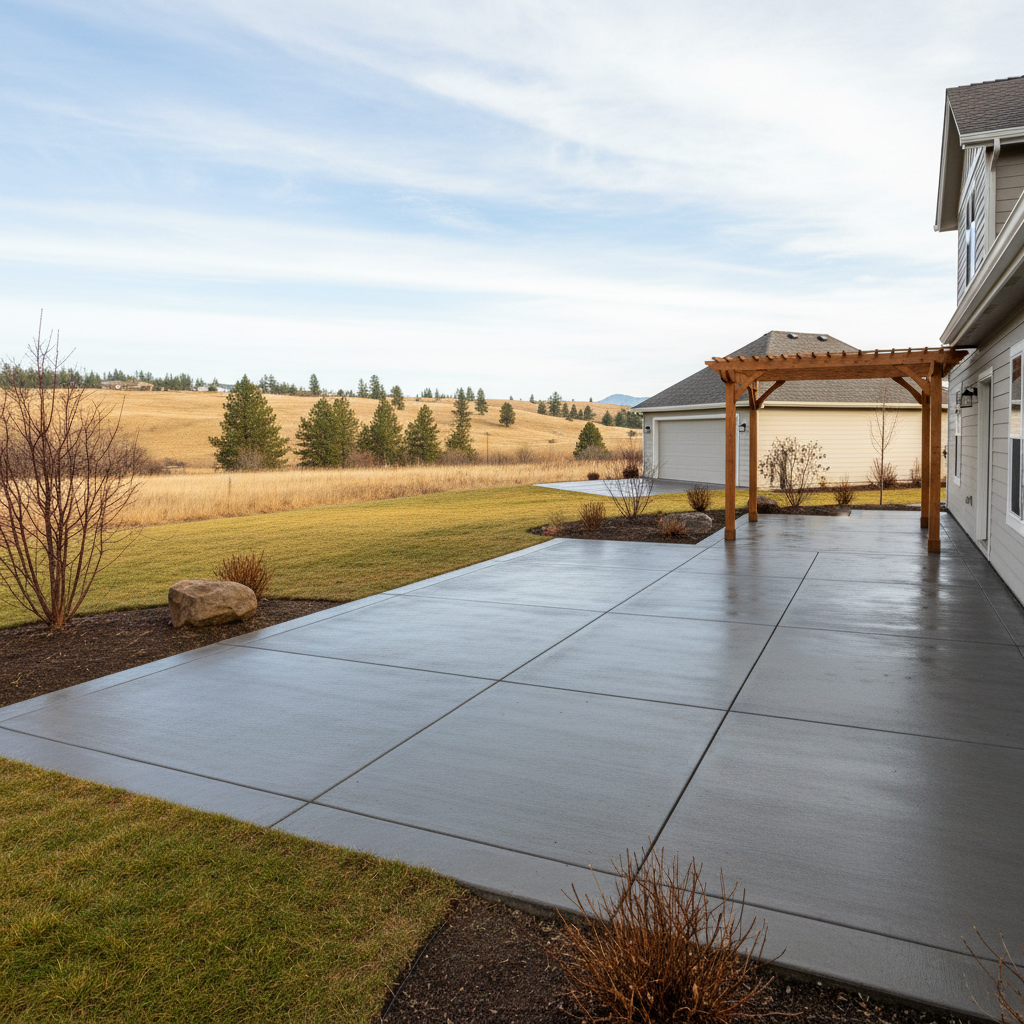
Concrete driveways around West Pasco or the Road 68 corridor hold up for decades while others start crumbling after just a few years. A lot of it comes down to how well your flatwork handles the local climate. Here in the Columbia Basin, we deal with extreme seasonal swings that can test even the toughest mixes. Between the sandy, shifting soils and weather extremes, timing and maintenance matter.
How Pasco Weather Affects Concrete Pours
Our local climate does not cut contractors any slack. Summer temperatures regularly climb past the triple digits, which creates a massive headache for fresh concrete. When it is that hot, water evaporates out of the mix way too fast. If you do not use hot-weather pouring protocols or schedule pours for the early morning hours, the surface sets before the internal chemical reaction can finish. That leads to shrinkage cracks and a weak top layer.
On the flip side, winter brings freezing temperatures and repeated freeze-thaw cycles. Moisture gets trapped in tiny microscopic pores or unsealed expansion joints, turns to ice, expands, and breaks the material apart from the inside out. That is why Alpha Concrete Co always specifies air-entrained concrete mixes for outdoor flatwork in Franklin County. Those tiny trapped air bubbles act like microscopic shock absorbers when water turns to ice.
Best Times of Year to Schedule Flatwork
Spring and fall are prime time for new flatwork installations. During these months, daytime highs usually sit in that sweet spot between 50 and 75 degrees, allowing the slab to cure at a steady, manageable rate. We can still pour through the summer, but we have to adjust our start times to first light and use evaporation retarders to keep the cream workable.
Winter pours are risky. If daytime highs drop below freezing or a sudden hard freeze hits overnight before the concrete reaches its design strength, the structural integrity is compromised. If you need a pad or walkway poured between December and February, you have to factor in heated blankets and specialized accelerators.
Year-Round Protection Strategies
You can dramatically extend the life of your patio, sidewalk, or driveway with a bit of basic upkeep. Here is what you should do:
- Apply a breathable, high-quality penetrating sealer every couple of years to keep winter moisture and de-icing salts from soaking in.
- Keep expansion joints clear of dirt, gravel, and organic debris so the concrete has room to naturally expand and contract as temperatures shift.
- Wash away chemical spills, oil leaks, and fertilizer residue quickly, especially because organic stains can bake deep into the pores during our long, intense summer days.
Alpha Concrete Co has seen how local soil and weather conditions impact flatwork firsthand. Taking care of small cracks early prevents them from turning into expensive slab replacements down the road.